
Erica Luke at The Hide : I see tending to the garden as a creative act…
Arriving at my artist-gardener residency at The Hide, I already had an idea of what I wanted to explore during my few days there. In a few months, I would be contributing to a group exhibition based around the theme of transitions, and I hoped to create some work for this. Recently, I’ve found myself struggling with the prospect of perimenopause; a transition that feels both inevitable and unpredictable. I am already moody, forgetful, and tired enough. The idea that this may escalate is frankly very unsettling. This shift into a new phase of life is one I cannot avoid, yet I don’t know how to approach it without fear.
I have a background in horticulture, with a particular passion for community gardening and permaculture. I see tending to the garden as a creative act. My art and gardening practices exist in a reciprocal relationship, where I see gardening as a creative partnership with nature, and each discipline enriches and informs the other.
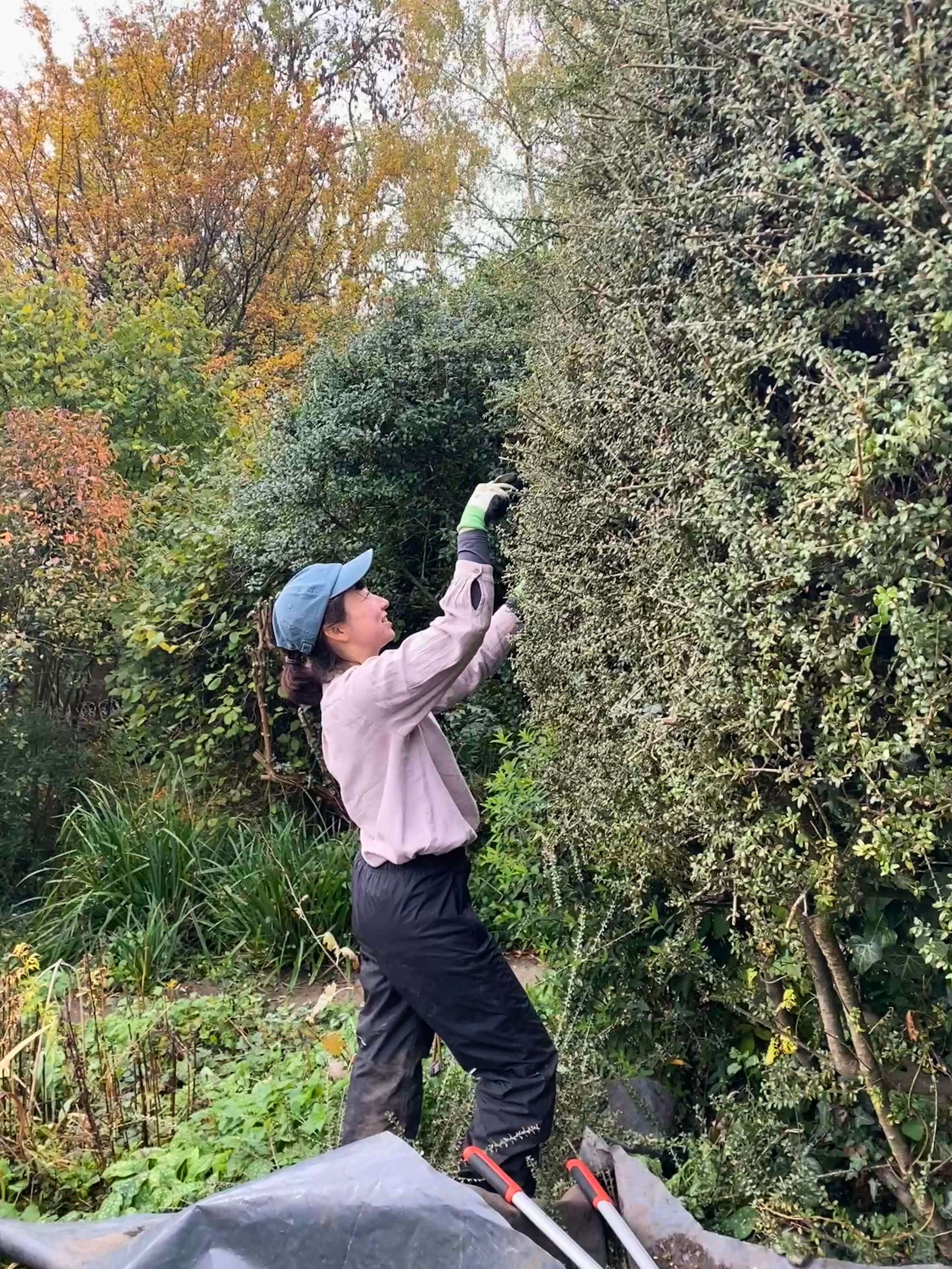
Immersing myself in the garden at The Hide brought an immediate sense of grounding. There is something deeply calming about getting busy with physical tasks: pruning shrubs, sawing away dead wood, raking beautiful autumn leaves into piles. I gathered windfall apples, inspecting each to decide whether they’re good for eating or not. In immersing myself in the landscape, I could observe intimately this seasonal moment, of nature in flux.
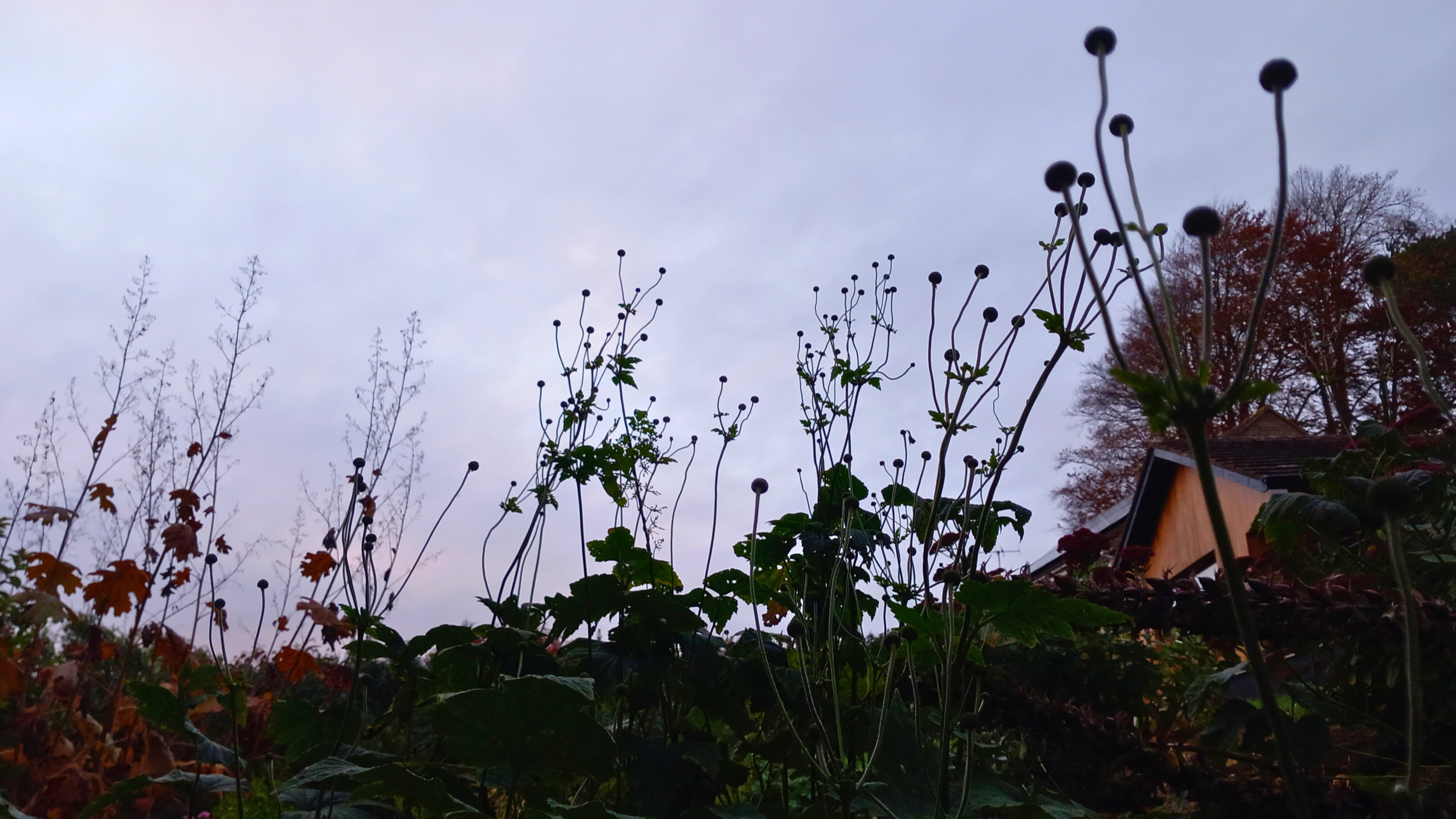
As I worked, I found myself drawn to certain plants in their state of transition. The dramatic stature of the plume poppy with its heads of delicate silvery lace. Broad leaves curling inward and shifting through acid yellow, muted lilac and rust. Japanese anemones, now bare of petals, leaving curious seed heads that looked like extraterrestrial creatures. Fennel stems turned brittle and hollow, their umbels quivering with seeds. At first glance, these scenes could be looked on as decline or decay. But viewed another way, this was nature reorganising itself for what comes next. A reallocation of energy, a relinquishing of what no longer serves, a quiet preparation for renewal…. This shift in perspective allowed a deeper appreciation of their forms in transition; the strange beauty revealed as these plants distilled down to their structural essence. Fragile but also full of potential.
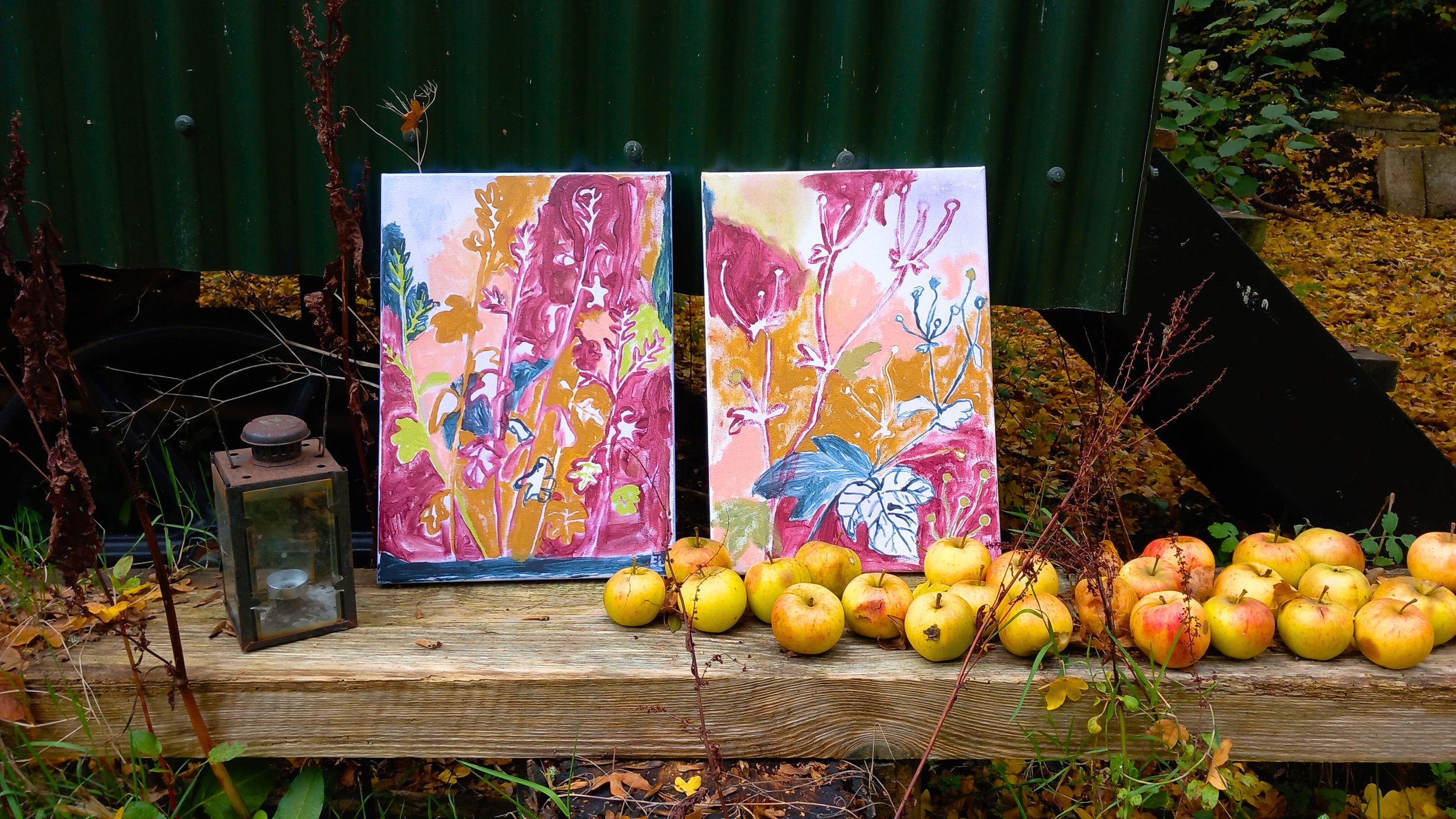
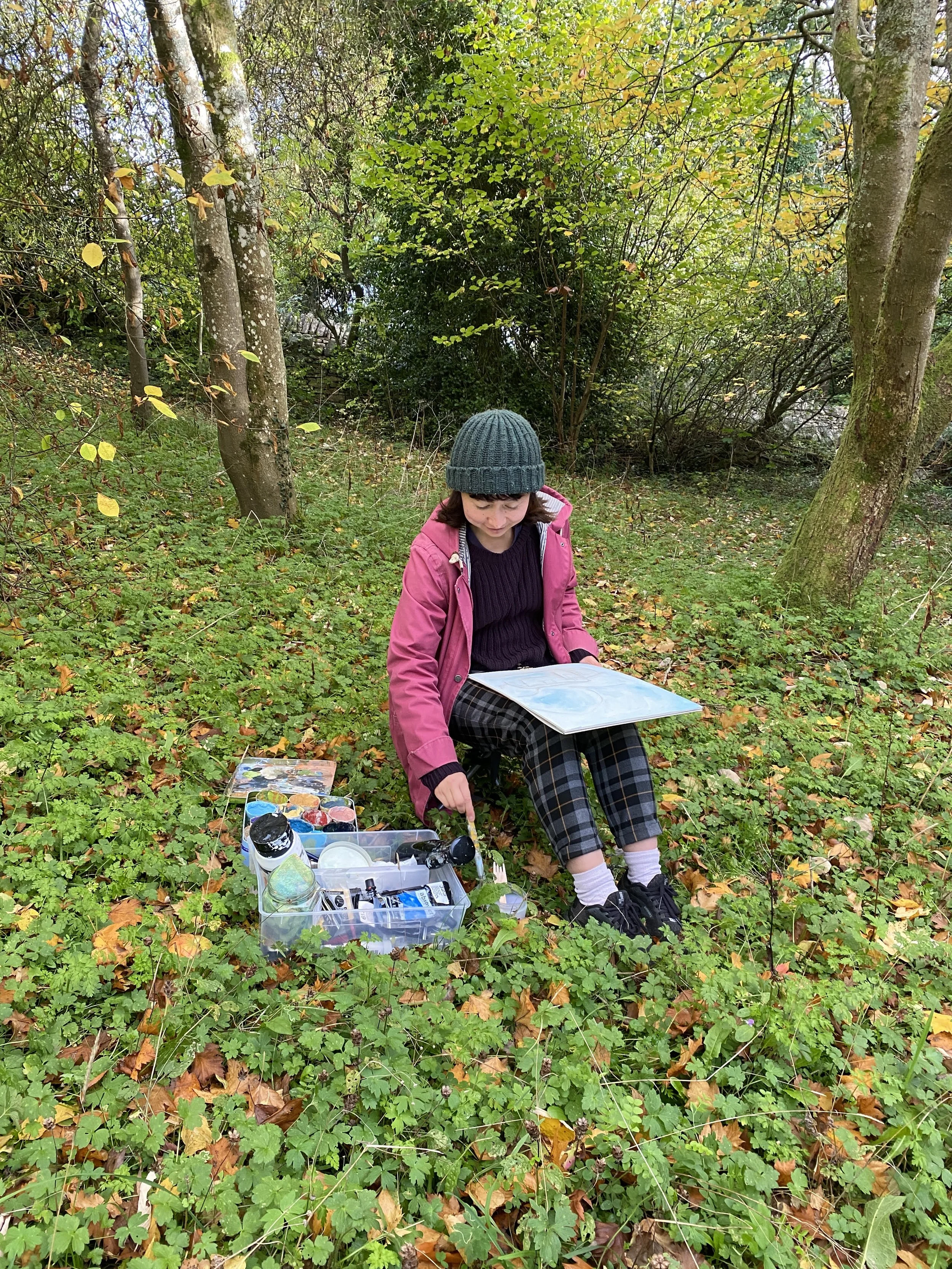
The foundations of my artistic practice are my sketchbooks - I use these to record my observations of the landscapes and people I spend time with. So I set about sketching the plants that caught my eye as these thoughts surfaced. These then were the basis of some gel plate prints and paintings on canvas that I went on to develop during my time at The Hide. I was only there for a few days so that added a welcome pressure which worked in my favour, making me much more productive in my practice than usual.
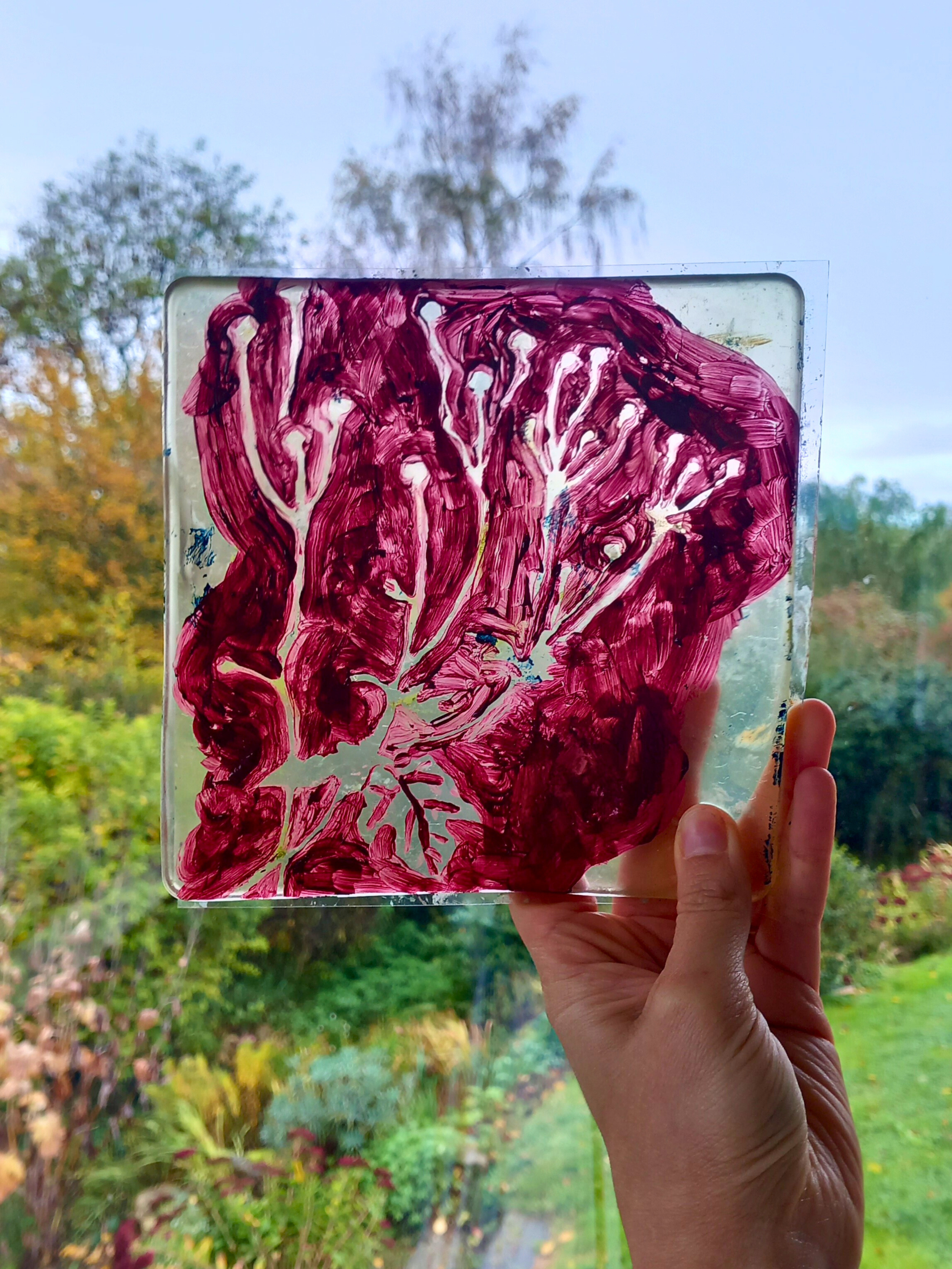
Transitions in nature bring loss, but also recomposition. We trust that perennials return after their winter breakdown, often bigger and better in the right conditions. Annuals set seed and become ancestors. Perhaps there is comfort in recognising that nothing in nature transforms without purpose.
So I left The Hide with these possibilities: Can I hold trust alongside fear as I move into my own next season? Can I believe that I (and my husband!) will survive the upheaval of my transition? Might this change not diminish me, but instead reveal a truer version of who I am?
You can find out more about Erica’s work here:
instagram: https://www.instagram.com/ericalukeart/
website: http://ericaluke.com